Your prompt word this week is
DISH
I remember my nan using this word to describe a film star she thought was very good-looking. ‘He’s a dish, isn’t he?’ she said. But aside from referring to someone who is handsome, we use the word in lots of other ways – a satellite dish, something to serve food up in or food prepared in a particular way (e.g. a vegetarian dish) and we talk about dishing the dirt on someone. What does this week’s prompt word mean to you? You have two weeks for this prompt as I’ll be away next week.
Fact or fiction, prose or poetry, I would love to read your thoughts on this week’s prompt, but there’s no obligation to share your writing. Here is the work you shared on the last prompt CAPTURE.
The Best Is Better When It’s Good
I want to capture what is best.
If it’s not good, that best is hollow.
But only God is good I hear.
Look! He comes. He’s drawing near!
He’ll capture me and may I follow.
An overly feminized culture is ripe for capture. Not because women are making most of the decisions but rather because, under that condition, fewer men feel empowered to take responsibility.
Wilfred Leahy:
The lab fell silent as Jim started the countdown, laser was at the right temperature, and the glass at the right sound, with a range of frequencies humming in the air. The experiment was to fire the laser ten yards into the newly constructed capture bowl built of armoured glass. Would it hold and confine the particles within its glass walls? This was the big one: five, four three, two, one, fire!
Everyone held their breath.
Jim shouted, “Gone. What’s your end Jill?”
There was a moment in time as all the people looked at Jill who was looking into the capture chamber through the electronic microscope. She did not say anything but just gave the thumbs up. The whole lab cheered at once and hugged each other. It was the end of five years’ work. Now they knew that the new capture chamber worked; there inside, captured, were the two entangled particles.
The Essential Galápagos
Alex loved to take snapshots with his iPhone, but he never really thought of himself as a photographer, at least not like some of his very talented friends, some of whom actually had their photos published in magazines or hanging in galleries. But they all had very expensive, state-of-the-art cameras and spent hours post-processing the photos they took.
But Alex couldn’t afford to spend a lot of money on cameras and lenses, or to devote hours to post-processing. So he would stick with his three-year-old iPhone, which he thought took some very good pictures, pictures that his friends would remark were quite good “for snaps taken with a phone camera.”
Alex did save enough money, though, to enable him to take a four day trip to the The Galápagos Islands, an archipelago of volcanic islands in the Eastern Pacific, when a local travel agency was advertising great deals on Galápagos tours.
Alex was excited that the tour company and the hotel he was staying at were sponsoring a photography contest called “Essential Galápagos.” He noted that there were several categories in the contest, including one for cellphone photos.
By his third and last day of the tour, Alex had taken hundreds of photos, but he didn’t think any were contest-worthy. And then he spotted this giant Galápagos tortoise in a wet grassy area less than ten feet from where he was standing. It was staring at Alex, as if daring him to take its picture.
Alex obliged. He aimed his iPhone at the huge tortoise, zoomed in just enough to capture the expression on the turtle’s face — calmly unimpressed, with a kind of ancient, knowing neutrality. Alex felt as it the creature was quietly judging the situation but was too patient to react. There was a hint of curiosity in the way it faced forward, balanced with a serene, almost meditative stillness. Alex pressed the shutter on his iPhone an instant before the tortoise turned and started to walk away.
When he got back to the hotel that afternoon, he sent the contest sponsor a JPEG of the tortoise photo. “Here is my entry for the ‘Essential Galápagos’ photo contest,” he wrote.
About a month later, Alex received a package from the Travel Agency. He opened it up and saw that it contained a blue ribbon labeled “Alex Ramsey — Best in Category: Cellphone Photography.” There was also a small, gold loving cup, with the inscription, “Alex Ramsey — Best Photograph — 2026 Essential Galápagos Photo Contest.” The box also contained a $1,000 check and a $500 check and a letter announcing that that Alex had not only won the best cellphone prize, but the overall best photo in the contest prize. There was also a photo showing a blowup of his tortoise photograph framed and prominently displayed in the lobby of the hotel.
The ribbon, loving cup, checks, and letter brought tears to Alex’s eyes. All Alex could think about at that point was how his photos were quite good “for snaps taken with a phone camera.”
Capture Time
If a tsunami sinks amnesia
fragments of sorrow submerge
regret and loss wash away
past and present fade
and time is forgotten,
now fragile life
is endless and lonely,
but acts of love pepper the sky
stars fill your flashing eyes
if we could only remember
tomorrow we could capture time.
I savor each moment I spend in your arms
You capture my heart
With you sweet gentle charm…
To capture is to hold something that was never meant to stay.
A moment caught between breaths. Light resting briefly on skin. A glance, a feeling, a truth — pressed gently into memory before it slips away again.
As a child, I thought capturing was simple. A photograph. A drawing. Something you could point to and say, there — that’s it.
But time taught me otherwise.
You cannot capture laughter completely. It lives in echoes. You cannot capture love in full. It moves, changes, deepens.
And truth? Truth refuses to be held still for long.
We try anyway.
We write. We photograph. We remember. We tell the story again and again, hoping to keep something alive that was always meant to move.
But maybe capture is not about holding on. Maybe it’s about witnessing.
Being there when the light touches something sacred. Feeling it fully without needing to own it.
Because the most beautiful things we ever try to capture are the very things that set us free when we finally let them go.
Trying to avoid capture, the fox lead the hounds into the front door of a dog food plant, and then left by the rear, alone.
Foul Play On a Home Run Ball?
The baseball went up into the stands in front of a little boy and girl – who tried to grab it.A huge man leapt across the stair path to snag it, – the scene was captured on the big screen.The ball park management ended up giving the boy and girl both baseballs from the current game. Later the huge man returned the first ball to the little girl… since he saw how horrid he looked at taking it away from a child in the first place. The Mother later said that she as well as her children forgave the huge man… and that others should too.
“Big Brother’s” sky eye
appears almost everywhere
karma rewinds, acts
This story was featured at the end of a six o’clock newscast yesterday. The anchors attempt to share good news. One wonders if the huge guys’ actions weren’t captured on the big screen, if he would have returned the baseball to the girl? Some folks seem to get too excited about catching baseballs at the stadium. The huge guy had facial hair and a long beard… I wonder if he’ll shave it to attempt to capture a new identity?
When trying to make a great first impression,
You have to find the right things to say.
I hope this captures your imagination…
I excel at verbs ending in “k”!
Like “cook” “think” “talk” “multitask”…and a few others…imagination required
back there to find
images i have captured in my mind
like the old journey cd
fast blues and furious
Cheese they say, to get a smile,
Acting foolish in front of the lens,
Photographing images making memories.
Thumbs in the way, heads cut off,
Upper torsos slanting sideways,
Riotous laughter when things go wrong:
Eventually capturing that ‘special moment’.
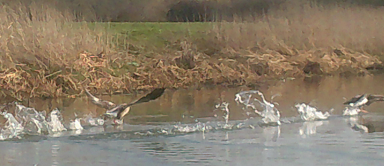
Photo from the boat on the River Avon March 2015.
A true story of how our cat captured our hearts so many years ago. She used to love to roam wild and free in the hilly mousy country. It was here on this side of the province where she found us.
Rall:
capture
happy moments
imprint them on your mind
blocking out the horror of this
bleak world
A Politician
he mounts the podium
words polished, heavy, meaningless.
promises? oh, a buffet
carefully plated to capture applause,
delivering nothing but air.
elections flash by
cheers, cameras, selfies.
Behind the curtain,
alliances fold like wet paper,
convictions twist like cheap plastic.
hero? villain?
who’s counting?
the show must go on.
the crowd, captivated,
applauds motion over substance.
a masterclass, really
say much, do little,
and let history capture
the applause it doesn’t deserve.
Susan Batten:
Captured
You captured my heart
but you tore it apart.
A captive, I stayed
and went on being brave.
You gripped hard at your prize –
you should feel no surprise
I slipped out of your hand –
Thank you no, wedding band.
Capture the Moment
How best to capture the moments of a perfect wedding? Heaven knows they pulled out all the stops. But memories fade so quickly, however hard I try to bring them back.
The album is full of poses and boozy grins and silly faces. The video was even worse, shot by my niece, who was staggering before the service began. The best shots were at the end when they drove off to the airport nearby to spend the night before their honeymoon flight.
There’s no recording that encapsulates Sandy in the way that old photo did of my twelve-year-old strutting in full pantomime regalia. Sandy grew to hate it as a teenager and, I suspect, removed it from that year’s photo collection. I can’t find it anywhere.
The letter their best friend sent afterwards reminded me of things I’d almost forgotten, but it couldn’t quite conjure up that feeling of hope and anticipation – of their life ahead to be discovered together. I don’t think I’d ever felt with Sandy’s father the happiness they radiated that day.
While I was scouring through photos, that song came on the radio. Ever since Sandy moved out, I keep the radio on during the day. It fills the house with sound, at least.
This was an old classic – a song that was in the charts way back when I was pregnant. Sandy loved it too and chose it for their first dance at the reception. On hearing the opening rift, I was back in the moment, watching them circle the dance floor.
I wasn’t ready for the newer number the radio station played next. This one had been playing in the background when I answered the door a fortnight later to the police officers who came to inform me of a fatal pile-up on the motorway bringing them home from the airport.
Carbon Capture and Storage an Unfulfilled Promise
Carbon capture and storage is the process of separating carbon dioxide (CO2) from industrial emissions to prevent it from entering the atmosphere and contributing to climate change. There are also systems that can remove carbon dioxide directly from the atmosphere, but this is expensive. After capturing the carbon dioxide, it is compressed and stored permanently underground or used in products.
Capturing carbon dioxide from concentrated sources like ethanol or natural gas plants can cost as little as $15–$25 per ton, which should be compared to the huge cost from the damage to health and the environment caused by carbon dioxide added to atmosphere. This cost ranges from several hundred dollars per ton, to thousands of dollars per ton, and even one hundred thousand dollars per ton according to some estimates. Yet it has only captured about 0.1% of global emissions, making its overall climate impact negligible. Instead of storing the captured carbon dioxide it is often injected into nearly depleted oil wells to force out the remaining oil.
If you have not heard about carbon capture before, its existence may be a surprise to you. If you do know about carbon capture it is likely to come as a surprise to you that it is a potentially promising technology that is underutilized and not used correctly. The facts around this technology are surprising, which is why I call it a super fact.
For more, together with diagrams, click here
Ashes to ashes, dust to dust, as the curse goes
Capture our hearts as the lantern glows
He looks totally askance at the mystical tradition
Gnashes his teeth as he follows his descendants
Drinks an edelweiss liqueur and eats some birdseed
Paints his face in black and that may be irrevocable
For all the ludic exuberance of this game
There may be winners and losers, too
The Disposition
I moved through the receiving line slowly, dutifully, reluctantly. God, I hate funerals.
The heavy, over-warmed stillness. The coagulated murmur of restrained voices. It all makes me feel like I’m capturing the scene through a Vaseline blurred lens- nothing is quite real.
I kept my eyes down as I shuffled forward. Avoiding eye contact, avoiding recognition, avoiding whatever small talk people think belongs in a room like this. So when I finally reached Carol- my client’s widow- I wasn’t prepared.
I reached for her hand before I lifted my eyes.
Whoa.
If I hadn’t known she could be no one else, I might not have recognized her. The stylish black veiled hat should’ve offered some cover, but not enough. A dark bloom along her cheekbone. A swelling that had taken one eye. A distinct yellowing at the jaw.
She saw the startle in my expression before I could smooth it away. She lifted one gloved finger to her lips- the gesture small, precise- and whispered, Later.
I’ve attended my share of client funerals. It’s the nature of Family Law- you outlast the entanglements, and sometimes the people. But this was the first time I left a receiving line more interested in the disposition of the widow than the will.
Catching Light
At dusk, when the day loosens its grip and light forgets its own edges, I once tried to capture the sun.
I didn’t do it dramatically. No grand declarations. Just a glass jar, slightly smudged, and a seriousness that only children possess, the kind that believes the world will cooperate if asked gently enough.
I waited for the sunlight to soften, when it turned golden and almost tangible, then cupped it carefully, as though it were a small, warm animal.
For a moment, it seemed to work.
The jar glowed. My breath paused.
Then the light slipped.
Not abruptly, or cruelly, just… inevitably. Through the thin spaces between my fingers, through the idea of containment itself. The jar dimmed. I remember staring, not disappointed, just confused. As if the sun had broken an unspoken promise.
For years, I called that moment my first lesson in failure. For years, I was wrong.
I grew up into someone who captures things. I say that without irony, which should tell you something.
I carry a camera, a notebook, and an unshakeable belief that life is something you can master if you’re quick enough. I capture sunsets – though, if I’m honest, mostly their afterthoughts. By the time I click the shutter, the sky has already changed its mind.
I capture laughter, but only the second after it peaks, when it has already begun its quiet descent into memory. I capture conversations, scribbling lines down mid-sentence, missing the ones that matter while securing the ones that sound good later.
I capture people too, or at least, I try to.
I listen intensely, nodding with what I hope looks like presence but is often just preparation. I collect gestures, phrases, pauses. “You said something beautiful just now,” I interrupt, and repeat it back slightly rearranged, polished, contained.
It always sounds less alive. Still, I persist. Because persistence looks a lot like confidence from a distance.
Everything worth having can be captured. I used to believe that. And, I’m not entirely sure I’ve stopped.
The first crack appeared quietly. I was trying to capture silence.
I remember the place clearly, not for how it looked, but for how it refused to insist on itself. The air was thick, sounds softened into suggestion. I raised my camera, then lowered it. Opened my notebook, then closed it. Shifted, frowned, recalibrated.
“This is harder than it should be,” I muttered, to no one, which felt appropriate. Silence, it turns out, does not cooperate with documentation.
So, I tried to define it instead. Whispering descriptions under my breath. Absence of sound… presence of calm… a kind of auditory blankness…
The silence didn’t agree. It lingered, unchanged, unimpressed. And then, something strange happened, not dramatically, with thunder or revelation, but with a subtle inversion I didn’t notice until it was already over.
I stopped capturing.
And for a moment, brief, almost invisible, I had the unsettling sense that I was being observed.
Not by a person. Not by anything I could name. Just… by the moment itself. As if the stillness had turned toward me, studying the way I fidgeted, the way I strained, the way I tried to hold what had never offered itself to be held.
I laughed it off. Called it a lapse in focus.
But something had shifted. After that, time began to behave differently around me.
Photographs I took felt unfamiliar when I looked at them later, not wrong, just incomplete, as though the most important part had declined to appear.
Notes I wrote read like approximations of something that had once been real but had since moved on.
Memories refused to stay edited. They unraveled, expanded, contradicted me. A laugh I had captured as light and fleeting revealed, upon return, a trace of sadness I had not noticed. A conversation I had archived as profound now felt rehearsed, hollowed out by the very act of preservation.
It’s like things change after I capture them, I remember thinking. But they didn’t. I did.
The truth arrived without ceremony. Capture had never been possession. It was interruption.
A moment paused is a moment altered. A feeling named is a feeling nudged out of its natural shape. To capture something is not to keep it as it is, it is to transform it into something that can be kept.
And what can be kept is rarely what was.Once I saw it, I couldn’t unsee it.
In the way a conversation lost its warmth the moment I summarized it. In the way a photograph replaced the memory of being there. In the way trying to hold onto a feeling made it slip faster, like gripping water too tightly.
Even people, especially people resisted me. The more I tried to define them, the less they resembled my definitions. They moved, evolved, contradicted themselves with a kind of quiet defiance.
Nothing stayed still long enough to belong to me. Nothing ever had.
One evening, not unlike the one from my childhood, I found myself holding a glass jar again.
I don’t remember where I found it. It almost felt like it had been waiting. The last light of the day rested briefly against the glass. Familiar, unbothered.
This time, I didn’t try to capture it. I didn’t even lift the lid. I just watched. The sunlight touched the jar, lingered for a fraction of a moment, and then moved on, as it always had, as it always would.
And for the first time, I understood something that had been waiting patiently for me to stop chasing it:
Capture is not about holding.It is about noticing, just long enough to realize you never could.
We like to believe we can keep the things that matter. We archive them, photograph them, write them down, replay them, frame them, define them. We build small, careful containers for moments that felt too large to lose.
But the act of capturing is not preservation.
It is farewell.
Every photograph is a goodbye disguised as a memory. Every written line is a version of something that no longer exists in quite the same way. Every attempt to hold a moment still is proof that it has already begun to move beyond us.
And yet, I continue. Not because it works. But because somewhere, beneath all my careful attempts to keep, I understand that the beauty was never in the holding.
It was in the almost.
That child with the jar wasn’t failing. She was me, learning the only rule that has never once been broken: Nothing worth capturing was ever meant to stay.
And perhaps that is not a loss.
Perhaps it is the only reason anything ever feels worth reaching for at all.
***
Image credit: Pinterest


 Esther Chilton
Leave a reply to nd 05.06 XXVI Fiction haibun OLWG 426 T & K / EC 114 – Jules Pens Some Gems… Cancel reply