This week’s writing prompt is
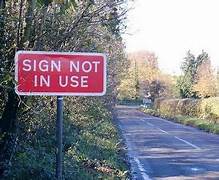
SIGN
My chosen word this week popped into my head, literally as if it was a sign! I then started to think about other meanings to the word: road signs, a gesture, to sign something with your signature, to sign up to something, sign language and much more. What does it mean to you?
Fact or fiction, prose or poetry, I would love to read your thoughts on this week’s prompt, but there’s no obligation to share your writing. Here is the work you shared on the last prompt OUTSIDE.
Outside the world I used to know
I’m inside one that’s new.
Although it’s strange, but even so,
I’ll cherish this one, too.
Tony:
Outside,
He always said: « Stay outside. »
Not outside to run, not to leave.
But outside… out of what you are instilled, out of the formatted world, out of the frame that folds beings until they forget that they have a supple heart, not a watch.
He lived in a cabin at the edge of silence, between two maritime pines, with only the wind blowing in the branches as a clock. It was said that he had been a scientist, or a poet, or mad – maybe all three at once.
The children of the village called him ‘the watchman from outside’.
One day, I approached. He handed me an old cracked mirror, and muttered:
“Look at yourself inside. And tell me what you see outside.”
I couldn’t answer.
Not right away.
But since then, whenever I feel locked up, I listen to this word dance in my ears like a forgotten key in a rusty lock:
Outside.
And I’m going out.
Of myself, my fears, walls.
I walk, I breathe, and I remember that the mystery always begins at the door…
Color or think outside the box
There are no chains, there are no locks
Let your imagination fly
Best of all, just give it a try
When you’re done, you will find
It’s free and fun to use your mind
***
This unusual sky blue flower bed was outside a little shop. It has roses growing in it. We didn’t go in the shop (we were going to a restaurant next door), but it sure caught my attention. It looks like an actual little bed frame, with headboard. It’s also a rectangle box where they planted a bed of roses. On the front of the box it has the word ’boutique’ in big white letters. It’s in front of a window and brick wall.
***

Sky blue boutique flower bed

Close up of red and yellow roses in the sky blue flower bed
***
Going outside requires some planning. There’s the need for a shovel, bucket, and a light for the dark. One has to have sturdy clothes to stand the chill. Maybe it is all too complicated. After all, weighing trying to dig out, versus only five years on my sentence needs to be done carefully. I’ll let you know what I decide.
Sanny M:
He stood outside alone again
No-one saw him, no-one came
Head bowed low
A furrowed brow
Was this his place?
Just an unknown face?
He slowly mingled among the crowds
A lonely figure, not allowed
Desperate to be someone included
But only ever feeling secluded
He stood outside alone again
No-one saw him, no-one came
My feet stay rooted in this quiet place. Not for lack of desire but from knowing too well what awaits me outside.
I keep my door shut, the lock is a quiet reassurance, the blinds drawn like eyelids closed in dreams. Inside, the walls do not argue, the refrigerator hums a gentler world, and the clock ticks with no agenda.
But outside is the noise.
Too loud.
Too sharp.
Too fast.
A blur of screaming headlines and sirens that echo before the morning coffee cools.
Yes, there are times when the sun slants just right through the curtains, and a leaf shadows the sill like a whisper urging me to remember the sky, remember wind, remember that not everything wants to hurt you.
Yet when I try, each step outside my door feels like an invitation to chaos. A crowd, a cough, a glance that lingers too long. People shout opinions like gospel, and truth drips away in internet algorithms.
Summary:
I’ve selected a variety of pictures of our back garden for Esther’s prompt this week.
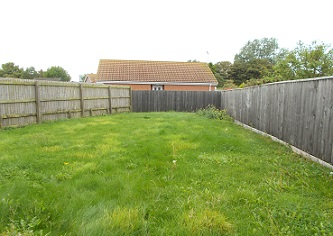
This was our back garden when we moved here in Sept 2017.
Over the years, our outside space has changed a fair bit.
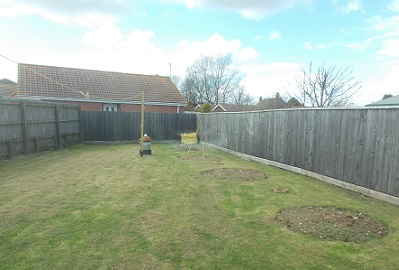
April 2018 and our areas for tomatoes and green beans being prepared.
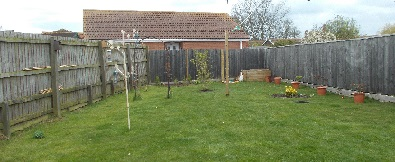
April 2019 , onion patch at the bottom right.
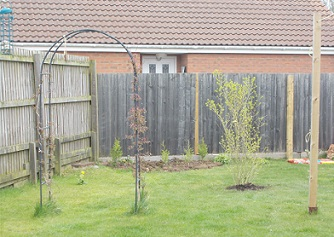
April 2019 clematis arch, tree and conifers along back fence.
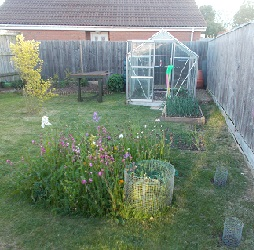
May 2020, greenhouse, onion patch in front, flower bed.
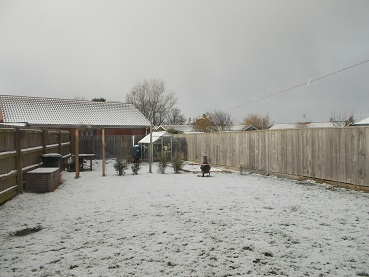
February 2021: a bit of all white!
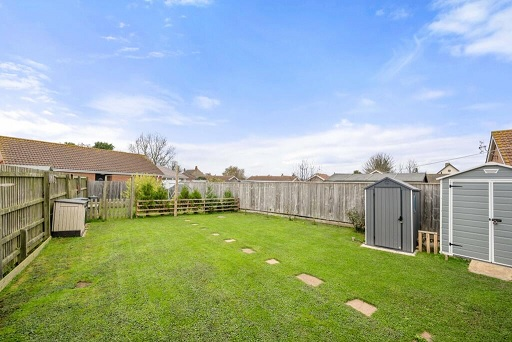
November 2024:
garden divided off with veg plots and greenhouse behind ranch style fence.
I look at my beautiful wife and remember the moppet I fell in love with as a boy child. I would push her on a tire swing outside her houseand was very grateful as a teenager every time she got to bounce on the trampoline in the back yard . Now grown, she is the best wife any old gambler like me could ever hope for. Every day before I roll out of bed I pinch myself to make sure this isn’t a dream.
Needing a Break
“Get outside, now!” That was the harried mom’s yell. She was trying to feed three month old twins and sitting between them, first a spoon in the boys mouth and then a spoon of mashed potato for the baby girl. Not many mothers can handle two small babies, a five year old and a seven year old, but she is managing. Summer heat and no break in school time, she manages. After the first two times she says “it’s time to go outside” doesn’t get their attention from their tablet games, she occasionally raises her voice.
Painting Outside the Lines
Our lives are made, by end of day
with rules we choose to disobey—
those pathways we choose to walk down
to find a different part of town.
Strange roads to new territory
that make the ending of our story
one unplanned, our life replotted.
All carefully scribed plans now blotted
out, with new ones wildly scribbled
in new colors brash and ribald—
breaking rules carefully set
for new patterns you won’t regret,
making our lives messier,
more “maybe” and less “yessier.”
Every rigid rule undone
might simply make our lives more fun.
There is a Place
To whisk away, to breathe the air
So brisk to move toward towns so fair
The quiet thrum, the crickets’ chirp
The bird call, from thickets heard.
No city lights, no harsh alarms
A pretty place just past the farms
A wild wood where creatures play
Or reach the beach to breathe the waves.
A slower pace, the quiet life
I know a place with silent nights
Only hoots from owls, no siren calls Emergencies by violent fools.
The only call I’m drawn to now
Is one that’s wild, I’m sure it howls
A reset button, a freedom trip
A week or so, to just be and think.
To be a beast, to be a man
To be a child again, without a plan
Like the river flows and bees will work
And trees exist, without a word.
A playful time, a solumn place
A time to reminisce on what is great
Speak to clouds, scream your name
Dissapear into a cave.
Then re-emerge into the light
Remind yourself, the world is right
Amongt the grey, amongst the smog
Aside the hate and all the blood,
There is a place you can breathe the air
Near little towns, oh so fair
With quiet thrums, where crickets chirp
These wild places of the earth.
The first time Jonah realized he didn’t belong, he was seven years old, sitting at a cafeteria table that wasn’t his. The other boys laughed about a soccer game he hadn’t played in, wearing cleats he couldn’t afford, eating lunches with bright packaging his mother never bought. He smiled anyway, clutching his plain sandwich, hoping no one would notice he was hoping.
He got good at being invisible.
By high school, Jonah had mastered the art of being near but not inside. He stood at the edges of conversations, nodded at the right moments, and laughed quietly when others did. He went to parties, but never drank. Danced, but never asked anyone to dance with him. He dated a girl once, Rachel, who talked about books he hadn’t read and places she had been. When she broke up with him, she said, “You’re sweet, Jonah. But sometimes it feels like you’re not really here.”
Jonah knew what she meant. He always felt like he was watching life through a window he couldn’t quite open.
College was better, in that the roles were less fixed. People were reinventing themselves, shuffling identities like a deck of cards. Jonah tried too. He joined a photography club, hoping the camera would give him a reason to observe. Through the lens, he found something like peace. The world made more sense in stillness, in the frozen slices of time he could control.
He took pictures of crowds, of lovers on benches, of musicians playing for no one in empty subway stations. People started to notice his work. Professors called it “intimate” and “haunting.” A gallery even featured some of his prints. Strangers stared at his photos and whispered about the loneliness in them. No one ever guessed he wasn’t just photographing isolation—he was living it.
Years passed. Jonah moved to a city where no one knew him and worked freelance gigs that let him stay behind the scenes. He had acquaintances, neighbors, a barista who knew his name, but no real friends. Not really. At night, he sat by his window and watched the light from other apartments flicker through the dark. Families ate dinner. Couples argued. Children danced in pajamas. And Jonah, camera in hand, sat still—always on the outside, looking in.
One winter night, snow fell thick and slow. The street below glowed golden under the lamps. Jonah bundled up and went for a walk, camera around his neck. He wandered for hours, until he reached a quiet park dusted in white. A little girl was building a snowman, alone but focused, her red mittens dusted with frost.
She saw him and waved.
He froze.
“Wanna help?” she asked.
Jonah hesitated, then nodded.
He set the camera down and stepped into the frame.
And for the first time in a long time, he wasn’t looking in. He was in.
When I was a young girl of eight years old, my grandparents moved to a farm in what is now the Northwest Province of South Africa. The farmhouse was old and primitive, built from stone and with a gas water heater in an outside room for washing, bathing, and all other activities requiring hot water. The kitchen had an ancient wood-burning oven and a single electric plug for the refrigerator. There was a gas hob for daily cooking.
When my father took us to visit our grandparents for a weekend, my mother was horrified by the conditions. Hayley was a baby of about six months old, and Catherine was four. I remember my mother struggling to get us all washed and ready for bed both nights. She was distressed, but I thought it was great fun. I imagined Catherine and I were Carrie and Laura Ingalls from Little House on the Prairie.
The first morning, Saturday, the neighbouring farmer and his young son came to visit my grandparents. The son was twelve and had a diesel engine quad bike for driving around the farm. He offered to take me for a ride. I was thrilled until my father warned me about the acacia thorns. The area was densely populated with trees that grew long, sharp thorns of between 8 and 10 centimetres in length. He said, these thorns could puncture a quad bike tire and cause it to crash. Quad bikes were, in his opinion, very dangerous. I learned much later in life that his friend’s son had been killed on a quad bike. Despite his dislike of quad bikes, he didn’t say I couldn’t go for the ride. Nope, he just ruined it by scaring me to death about the thorns. “The thorns can go right through the sole of your shoe and lacerate your foot. Acacia sap and thorns contain irritating toxins which trigger a severe inflammatory response in the soft tissues and bones,” he said. I was terrified and his well-meant warning completely spoiled my quad bike adventure. I just wanted to get back to the farmhouse and stay inside where I was safe from thorns.
To this day, I am scared of thorns. If I look at a picture of a thorn or read about a thorn, my eyes start to prick, and I close them protectively. My dad’s words resulted a lifelong fear of thorns. It astonishes me, when I think back, as he was really being overly dramatic. The thorns will do the things he said, but it is rare for a person to injure themselves by stepping on an acacia thorn. They are so long, they are difficult to miss when walking. I am not, however, fearful of quad bikes.
thorn anxiety
led to phobia for life
eyes prickle and burn
***


 Esther Chilton
Leave a reply to Kim Smyth Cancel reply