It wasn’t until I was in my twenties that I first learned my great grandfather, Arnold John Deller, had been wine butler to the Royal Family – to Queen Alexandra, wife of King Edward VII, and her son, King George V. My grandmother, Joan, was a private woman and didn’t talk about herself or her family that much. But, when I turned 21, and as the oldest granddaughter, she decided it was time I had a few things handed down to me. One was her beloved china doll, a doll that she’d played with as a young girl, and which had been given to her by her beloved father, a pretty wooden money box, made for her at Sandringham, where she spent time as a child in the 1920s, and some dolls’ house furniture.
The doll was beautiful, the money box ornate and the furniture breath-taking and bigger than any furniture I’d ever had for my dolls’ house. But then, it turned out, this wasn’t any old dolls’ house furniture; it had belonged to Queen Alexandra. I felt so honoured that my grandmother trusted me with these wonderful pieces. I proudly placed them on display, wondering about my great grandfather and the sort of life he’d had.
Being part of the Royal household staff meant my great grandfather was required to travel wherever he was needed, so as well as being present at Sandringham, he’d often find himself travelling between St. James’s Palace, Marlborough House and Windsor Castle. I wonder now about all the interesting and historical figures he must have encountered. Did he serve kings and queens, politicians and many other prominent people their wine? How I wish I could ask him. Just imagine what he’d have to say!
It was when a relative recently died, that several artefacts linked to the Royal Family and my great grandfather were discovered. The rest of the family hadn’t seen them before and it fired up our excitement and interest. One of my aunts started researching his history and discovered that Arnold first entered into service for the Royal Family in 1902. It’s not known what he did at that time, but in the 1911 census, he has been included in the household members living at Marlborough House. His occupation was given as cellarman to Queen Alexandra. He went to work there as part of the Royal household staff that were transferred from Buckingham Palace when King Edward VII died and Queen Alexandra moved out. He was listed as being single at that time so hadn’t yet met my great grandmother, Bertha Woolliams.
According to the 1911 census, Bertha was a kitchen servant at Bute House (now the Egyptian Embassy) for Mrs Clarissa Bischoffsheim. Her husband, prominent Dutch financier, Henry Louis Bischoffsheim was related to the Rothschilds. When Bertha left their service, she joined the Royal household staff as a kitchen maid where she met Arnold.
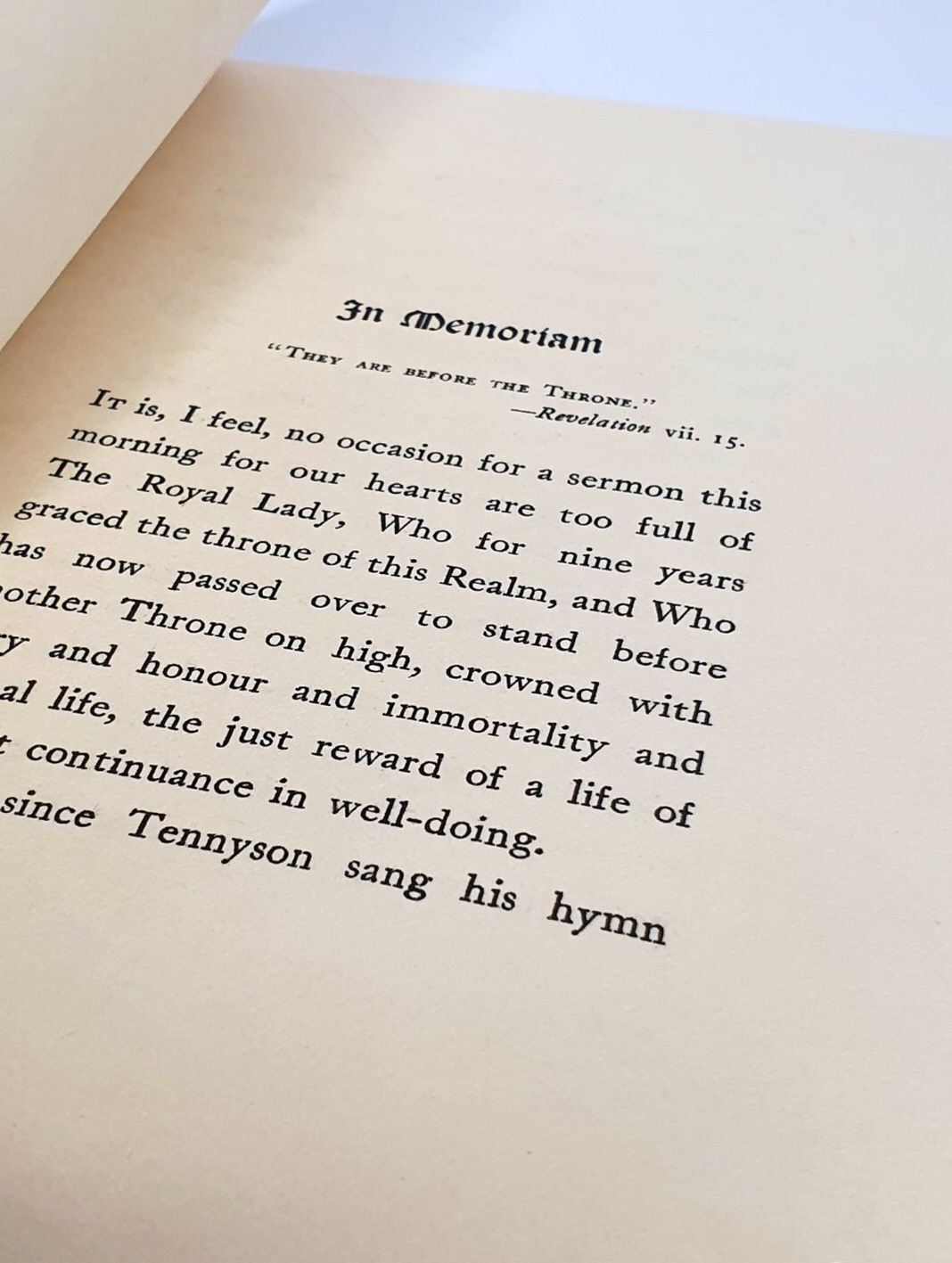
My great grandfather clearly held Queen Alexandra in high esteem; amongst the artefacts which have recently come to light is the order of service from a private sermon that took place in the Church of St. Mary Magdalene at Sandringham on November 22nd, days after Queen Alexandra died and before she was buried at Windsor Castle. The order of service is in pristine condition and Arnold kept it until he died. The sermon was preached by the Reverend A. Rowland Grant, Rector of Sandringham and Domestic Chaplain to the King. Inside, the Reverend gives a personal insight into Queen Alexandra’s character:
‘The Royal Lady’ who ‘was possessed in the highest degree with the gift of human sympathy’. He goes on to talk about her personality and what she meant to the People, ‘…the graciousness of Her character and the charm of Her presence…Wherever She went Her Majesty radiated happiness and blessing. Those little acts of spontaneous thoughtfulness and kindness, which were such a feature of Her life, will never be forgotten. Kindest of hearts was Hers and the cause of suffering or sorrow ever appealed to Her womanly sympathy and found in Her Majesty a generous helper for She delighted in doing good’.
As well as the order of service, there are several wine lists from Marlborough House and Sandringham, dated between 1924 and 1926. On the front of one is written ‘Marlborough House – Wines packed for HRH Princess Victoria – January 1926’. Victoria was George’s younger sister. From the list, Rudesheim wine seems to have been one of the most popular wines.
It appears there was an issue of what to do with 80 bottles of Champagne left over at Marlborough House in February 1925. Amongst the artefacts is an envelope with the Buckingham Palace stamp on it, addressed to my great grandfather at Sandringham. Inside is a note, on St. James’s Palace headed paper, from a Mr Luxon, beginning with information about enclosing consumption figures for 1924 and then going on to mention the Champagne:
‘With regard to the small quantity of 1906 Champagne remaining at Marlborough House (about 80 bottles) I think the best thing to do is to keep them for they will last a long time yet, never having been moved, but if Sir Henry wishes I think I could make a good exchange for some younger wines’.
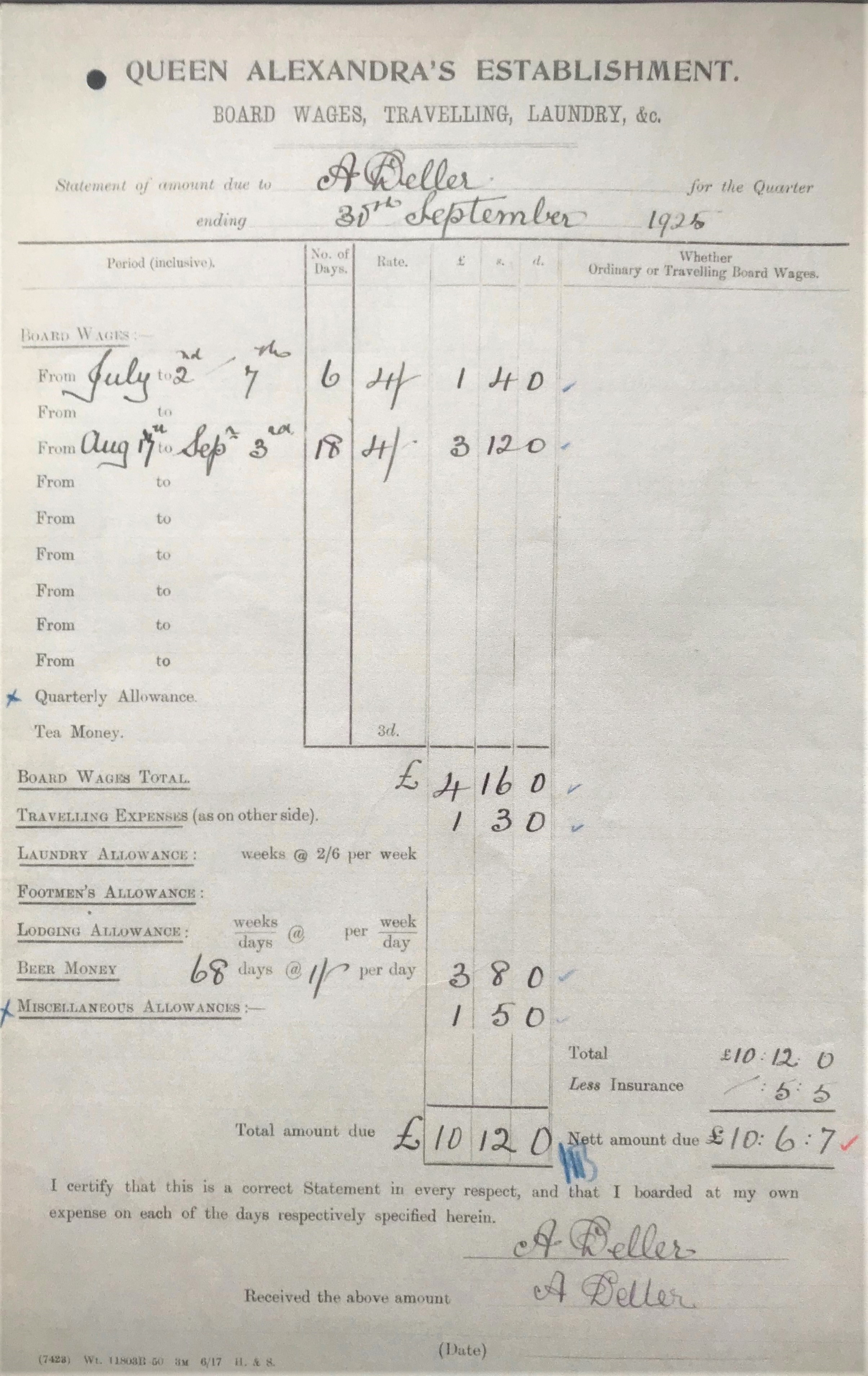
We’re not certain if Arnold was responsible for ordering the wines as well or keeping the overall figures. My aunt is looking forward to when the 1921 census is released, which will hopefully yield more information. She has discovered a voters’ list of some years later, where his occupation was recorded as that of ‘retired butler’.
I didn’t get to meet my great-grandfather; indeed, he was approaching 80 when he died in 1951, and my father was only nine, so even he has very limited memories of his grandfather. Aside from the time when my grandmother handed down the wonderful heirlooms, she didn’t speak of her time at Sandringham or much of what her father had been like, just that he had understandably been one for duty and order and had, of course, been immensely proud to have worked in the Royal household.
But all these wonderful mementoes have brought him to life for me as well as given me a small insight into the lives of the Royal Family.


Leave a Reply