It’s my pleasure to introduce Hugh Roberts as my interviewee this week. I met Hugh at the first Bloggers Bash in London and we’ve remained good blogging friends since then. Hugh writes short stories, a real passion of mine, too. He’s put together two short story collections. In the interview, he tells us more about them and his struggles with writing.
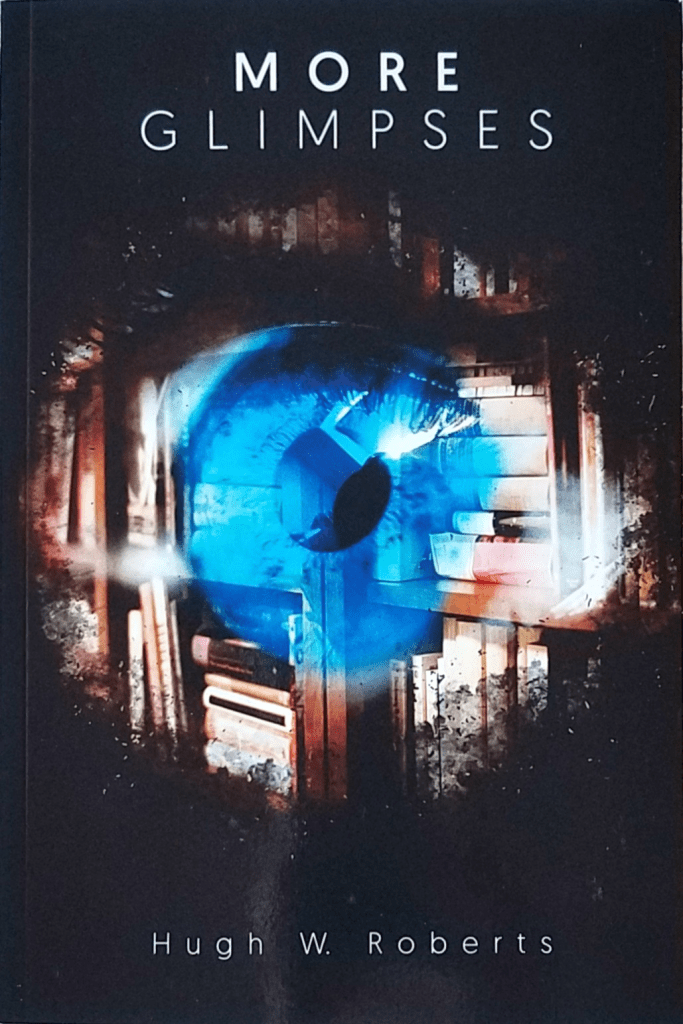
Q. Your second book of short stories, More Glimpses, was released earlier this year. Can you tell us a little bit about it?
A. It’s a collection of 32 short stories and pieces of flash fiction written in the same style as episodes of the Twilight Zone or Black Mirror. By that, I mean each story comes with a twist.
Some of the stories will shock readers, while others will have the reader on the edge of their seat.
From science-fiction to horror, fantasy to the paranormal, there should be a story for everyone in the book. This time, I’ve even included a rom-com story.
Q. What do you most enjoy about writing short stories?
A. I love to be challenged to write a story in as fewer words as possible and for it to include a twist that has the reader saying ‘I never saw that ending coming.’
As somebody who has lots of ideas for stories, keeping them short is a great way for me to get as many stories out of my head and into publication as possible.
I see short stories as a way to pack as much into a plot as possible before the plot starts going stale.
I compare it to a favourite TV show that should have ended while on a high instead of carrying on with more seasons that end up killing off the show and spoiling previous seasons.
There should never be a dull moment in any short story. For me, that makes writing short stories much more thrilling.
Q. Where do you get your ideas from?
A. Most of them come from writing and photo prompts and challenges.
I really enjoy taking up a challenge to write a story that includes a twist that few will see coming.
I also get ideas for stories from people watching and from overhearing conversations. Watching TV is also an excellent source of ideas.
Q. Which is your favourite book of short stories – your first book or this latest one and why?
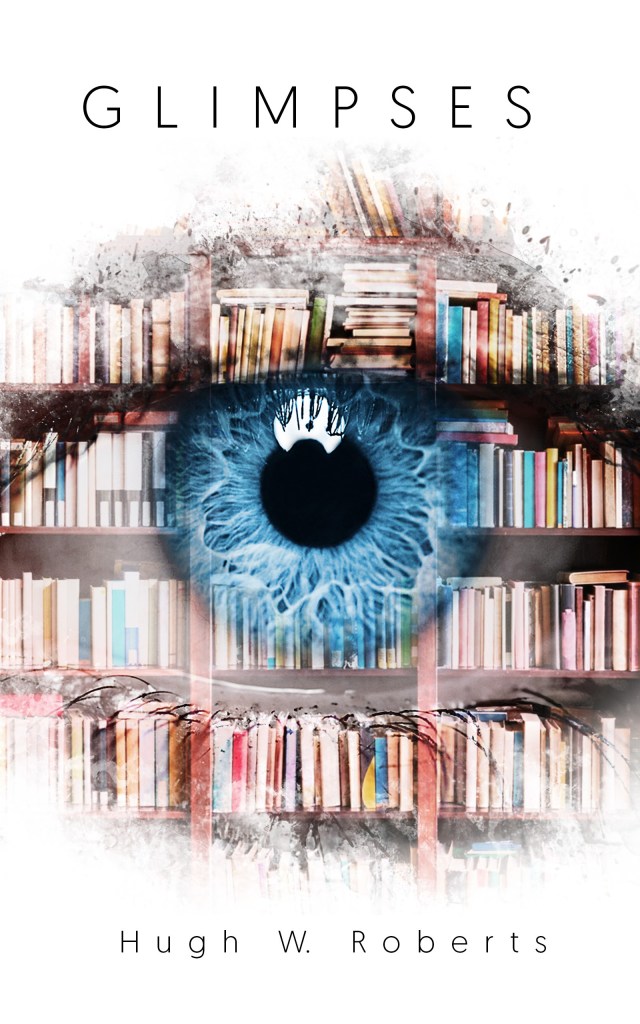
A. That’s a tough question but, thinking long and hard about it, I’d say Glimpses, my first book of short stories.
The stories in my first book were all written within a few years of me starting a blog. As somebody who was always frightened to publish any writing (because of being dyslexic), those stories helped me knock down the wall that dyslexia had built up around me.
I think many of my best stories are in that first book, but that’s just a personal choice.
Every one of the stories was a catalyst for more stories that went on to appear in my second book. I have a lot to thank those stories for.
Q. You’re dyslexic, which makes the writing and publication of two books all the more incredible. Can you tell us about the challenges you’ve faced being dyslexic?
A. I have written about the challenges of being dyslexic here.
Being laughed at for the mistakes that many readers would see as silly is a big challenge for me. It can often have the effect of making me look stupid in front of people who don’t know I’m dyslexic.
Another challenge is how to respond to people who, when finding out that I’m dyslexic, tell me that dyslexic people can’t write. As a hidden condition, it can be difficult proving to them that I am not lying to them.
Certain words and letters can play havoc with my brain. Not only that, but they’re often invisible to me, which makes writing even harder.
Fortunately, there is now lots of support for dyslexic people. However, when I was at school and during my early years of adulthood, the condition wasn’t recognised. Being told I was stupid or slow was hurtful when I felt like I was the only one in the world who saw words and letters differently to everyone else.
I really thought I had something seriously wrong with me.
Q. Are there any other challenges you’ve faced in becoming a writer and getting your books published?
A. Yes, the main one was always thinking my writing wasn’t good enough to ever be published in a book. That’s partly down to being dyslexic, which can have a dramatic effect on one’s confidence and wanting to succeed.
Time (or lack of it) is also another big challenge because there never seems to be enough of it to write. It’s taken me nearly six years to find my perfect blogging balance. Now I’ve found it, I’m putting it into practice. So far, so good.
Q. Do you get time to read yourself and if you do, what books do you read?
A. I find reading very difficult. I continuously struggle with plots and soon find myself giving up on reading because I don’t know what’s going on. It’s a struggle, but it doesn’t win all of the time.
There have been some books that I have managed to finish and review, mainly horror and science fiction books, but also some LGBT fiction.
Q. When you’re not writing, what do you enjoy doing in your spare time?
A. Because of my dyslexia, I get a lot of joy from watching TV.
Watching, rather than reading a story, is far easier for my brain to take in. I can sometimes find myself struggling to get into a plot, but nowhere near as much as I do when trying to read a book.
Q. Will we see a full-length novel from you in the future, or are short stories your passion and where you see your future writing?
A. Deep in the archives of my computer, there is a novel that is already over 30,000 words long, but my passion seems to be for the short story.
However, I am seriously thinking of turning one of my short stories into a novel. It’s an idea I’ve been playing with for some time.
Strangely, I was recently urged to get on with something I was thinking of doing when I received a message from a tarot card reading somebody did for me. Rewriting that short story into a novella immediately came to mind.
Q. Finally, what advice can you give to writers who are thinking about publishing a book, but haven’t yet taken that step?
A. Don’t allow anyone or anything to stop you from fulfilling the dream of publishing a book.
Read blog posts and articles that offer writing and publishing advice, and never be afraid to ask for help. There are lots of writers, authors and bloggers out there who provide free information on writing and publishing. Best of all, most of them are also very supportive.

Blog: Hugh’s Views and News
Twitter: @HughRoberts05


 Esther Chilton
Leave a reply to Teri Polen Cancel reply