Writing Workshop…Top Tips

Here is the second in my writing workshop series. Last week was all about the opening; this week’s it’s the ending’s turn:

Top Tips…

For A Tremendous Short Story Ending

You’re almost at the end of your cleverly crafted story, but how do you bring it to a satisfying climax? Here are some tips to ensure you leave your readers feeling as if they’ve had a compelling and entertaining read:

  • Don’t rush your ending. Some writers can see the end in sight and grab it – too soon e.g. in a romance story, you have gradually built up the will they/won’t they scenario. Your readers are right there with the characters, willing them to get together only for you to gallop towards the ending:

Zoe couldn’t bear to be without Sam. She dashed to the airport, took him in her arms and confessed her undying love. Two months later they walked down the aisle.

After connecting with readers emotionally all the way through the story, you sever the connection and leave them feeling disappointed.

  • Don’t over-explain your ending e.g. in a crime story, when you reveal who killed the victim, don’t feel as if you have to explain exactly why he/she is the murderer. If you have written your story well, your readers should be able to make all the connections to the clues you’ve woven into the story themselves. A short explanation to underline the revelation is fine, but a lengthy explanation will ruin your story.
  • Whatever you do, don’t end your story, ‘It was all a dream’. This ending has been done to death and is something guaranteed to make an editor or judge cringe.
  • Finishing your story with a cunning twist can make for a very effective ending and leave your readers admiring your brilliance. However, a lot of magazine editors and competition judges complain that they see the same twist endings again and again. Ones to avoid include the main character turning out to be a dog or a cat, a spouse’s strange behaviour leading their other half to think they’re having an affair when really they’re organising a surprise party, or a person who is seen at a time and place they couldn’t possibly have been turning out to have a twin. These are just a few among a very long list.
  • Not all endings have to be happy – depending on the publication. A story aimed at ‘The People’s Friend’, for instance, must have a happy ending. But a story written for a small press market or as a competition entry doesn’t necessarily have to. An ending that shocks or is poignant ensures your story will stay with your readers for some time.
  • Don’t go beyond your story’s natural ending e.g. in a horror story, it’s more effective to finish with the girl thinking she’s got away only for the monster to appear right at the end, its jaws drooling, than it is to go into graphic detail about how the monster finished her off, the hours all her friends spent looking for her, how her beloved dog pined for her and so on. There’s no need. Your readers will know exactly what’s going to happen to her and will be able to imagine it for themselves in their minds.
  • Don’t feel as though you have to tie your story up in a nice little bow. Many readers like a story with an open ending so they can finish it for themselves e.g. in a science fiction story, all the aliens could have left Earth after a fierce battle and your last sentence could reveal that one has been left behind. Your readers may decide that the spaceship comes back for their lost member, or perhaps it’s all part of their plan to conquer earth, or another scenario is that the alien goes on a killing spree. With an open ending, there’s plenty of ways for your readers to unleash their imagination and finish your story.
  • No matter your ending, it must be clear e.g. it’s no good having a character who’s killed off earlier on in the story suddenly turning up at the end alive and well without any explanation. As the writer, you know exactly what’s gone on but your readers need to as well. If you don’t tie up all the loose ends, you leave them feeling confused and let down.
  • Ensure your ending fits in with the rest of your story. Some writers create an incredible last line which is great, except if it has no relevance to the rest of the story. This will result in your readers feeling cheated.
  • Finally, the mark of a good story and successful ending is if you leave your readers feeling satisfied. Ultimately you want them to read that last line and think, ‘What a fantastic ending to a great story’. If an editor or judge is thinking that, then your story is likely to be published or be placed on the short list for winning a competition.

***
roth

39 responses to “Writing Workshop…Top Tips”

  1. Many thanks for this, Esther. Very helpful and much appreciated writing tips.

    Liked by 1 person

    1. I’m glad you’ve found them helpful, Helen.

      Like

  2. Great tips there again Esther. Thanks

    Liked by 1 person

    1. Thanks, Lynn 🙂

      Liked by 1 person

  3. I’ve not read anything like this before Esther … and from someone who really knows how to start and end short stories. I now have a copy of your collection of short stories ‘The Siege’ readily to hand as I write and would be lost without it. I’ll still need editing but hopefully not quite as much as before! Now popping back to your post on how to start a story … Eric.

    Liked by 1 person

    1. Thank you so much, Eric. Greatly appreciated 🙂

      Liked by 1 person

    1. An enormous thank you 🙂

      Liked by 1 person

      1. A huge ‘YOU’RE WELCOME’, Esther ❤

        Liked by 1 person

  4. Abrupt endings? Guilty!

    Liked by 1 person

    1. Your latest endings are pretty good, Jason 🙂

      Like

      1. You are, as always, most kind.

        Liked by 1 person

  5. Read, re-read, digested, bookmarked, following, appreciated. Invaluable Madam, I thank you. X

    Liked by 1 person

    1. Thank you for your kind words 🙂

      Liked by 1 person

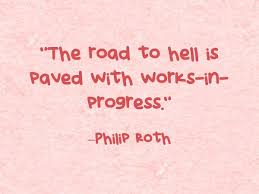
  6. Great advice. I have written a few stories with unhappy endings. I like to think of those tragedies as having a “hero’s fall” sort of character arc. The higher the character starts at the beginning, the more impactful the fall. Regarding the WIP quote you have there, do concept blurbs count as WIPs? If so, I’m half-way to Hades already.

    Liked by 1 person

    1. Thank you for your comment 🙂

      Liked by 1 person

  7. Thanks, Esther for these great writing tips. 🙂 — Suzanne

    Liked by 1 person

    1. You’re very welcome 🙂

      Like

  8. Esther, many thanks for such clear and informative advice.

    Liked by 1 person

    1. You’re very welcome 🙂

      Like

  9. Thanks again for these great tips, Esther. I’m finding them all very useful and know that will go on to make me an even better short story writer.

    Liked by 1 person

    1. Many thanks, Hugh. How is your writing going? And Glimpses? I hope it’s continuing to do well 🙂

      Like

      1. It’s going really good, Esther, I’ve got the bones for some more short stories for book 2, but need a few more yet. Getting paid royalties from Glimpses is such a lovely feeling. I’ll be promoting it some more from the Autumn.

        Liked by 1 person

      2. I’m so pleased for you. It’s so well deserved 🙂

        Liked by 1 person

  10. […] for the third instalment in my writing workshop series. Last week was all about the ending of a short story; the previous week focused on the story opening and this week it’s time for […]

    Liked by 1 person

  11. […] for the fourth instalment in my writing workshop series. I’ve covered the short story ending as well as the opening and last week I gave you a dialogue refresher course. This week, it’s […]

    Liked by 1 person

  12. […] for the fifth instalment in my writing workshop series. I’ve covered the short story ending as well as the opening.  I’ve guided you through dialogue and focused on the importance of […]

    Liked by 1 person

  13. […] for the sixth instalment in my writing workshop series. I’ve covered the short story ending as well as the opening.  I’ve guided you through dialogue and focused on the importance of […]

    Liked by 1 person

  14. […] for the eighth instalment in my writing workshop series. I’ve covered the short story ending as well as the opening.  I’ve guided you through dialogue and focused on the importance of […]

    Liked by 1 person

  15. […] for the ninth instalment in my writing workshop series. I’ve covered the short story ending as well as the opening.  I’ve guided you through dialogue and focused on the importance of […]

    Liked by 1 person

  16. […] for the tenth instalment in my writing workshop series. I’ve covered the short story ending as well as the opening.  I’ve guided you through dialogue and focused on the importance of […]

    Liked by 1 person

  17. I always love a twist at the end – makes for something for the reader to think about and I never try to be obvious. Great post 🙂

    Liked by 1 person

    1. Thank you. Twists are great!

      Like

  18. […] for the eleventh instalment in my writing workshop series. I’ve covered the short story ending as well as the opening.  I’ve guided you through dialogue and focused on the importance of […]

    Liked by 1 person

  19. […] for the twelfth instalment in my writing workshop series. I’ve covered the short story ending as well as the opening.  I’ve guided you through dialogue and focused on the importance of […]

    Liked by 1 person

  20. […] for instalment number thirteen in my writing workshop series. I’ve covered the short story ending as well as the opening.  I’ve guided you through dialogue and focused on the importance of […]

    Liked by 1 person

  21. […] for instalment number fourteen in my writing workshop series. I’ve covered the short story ending as well as the opening.  I’ve guided you through dialogue and focused on the importance of […]

    Liked by 1 person

  22. […] for the final installment in my writing workshop series. I’ve covered the short story ending as well as the opening.  I’ve guided you through dialogue and focused on the importance of […]

    Liked by 1 person

Leave a reply to Writing Workshop…Top Tips | esthernewtonblog Cancel reply

Discover more from Esther Chilton

Subscribe now to keep reading and get access to the full archive.

Continue reading